

The largest panel is not automatically the right bulk order. To buy workplace drug screening kits wholesale, match the test format and panel configuration to your program, then plan quantities around operational needs. Drug Test Cards and Drug Test Cups offer different formats, while panel choices determine which substances a kit screens for.
Bulk purchasing can simplify routine procurement, but choosing a kit involves more than comparing panel counts. Consider the substances your program covers, the collection format that fits your workflow, and how orders will support ongoing use. A clear match keeps purchasing practical and aligned with workplace needs.
This guide explains how Drug Test Cards, Drug Test Cups, and Saliva Drug Tests differ, what to consider when buying in bulk, and how safety-sensitive workplaces can approach kit selection. It also explains how Point of Care Medical’s Rapid Test Cup with Fentanyl and oral-fluid tests fit into the available options.
Key Takeaways
- Choose dip cards or test cups based on the collection workflow your workplace needs to support.
- Set panel configurations around the substances included in your screening program, not panel count alone.
- For safety-sensitive workplaces, align kit selection with the purpose and procedures of the screening program.
- Plan bulk orders around expected use and storage capacity to keep purchasing organized.
- Compare test formats and panel options before placing an order so the kits match your operational requirements.
Drug test dip cards
Drug Test Cards offer a compact format for workplace screening. Staff use a card with a collected specimen, following the product instructions. The panel configuration determines which substances it screens for, so format and coverage are separate purchasing decisions. A card suited to one program may not suit another.
Start with the screening purpose. If your workplace needs a defined substance panel, compare each card’s listed targets with your program requirements. Two cards with the same panel count do not necessarily test for the same substances. A five-panel configuration, for example, describes a count, not a universal list. Review the specific targets listed for each product before ordering.
Drug Test Cards may suit programs that need a compact, straightforward format. Their small size can also help organize individual tests in a supply area. The workflow still needs clear specimen handling and result documentation. Assign a staff member to manage each step, and keep the product instructions available at the point of use.
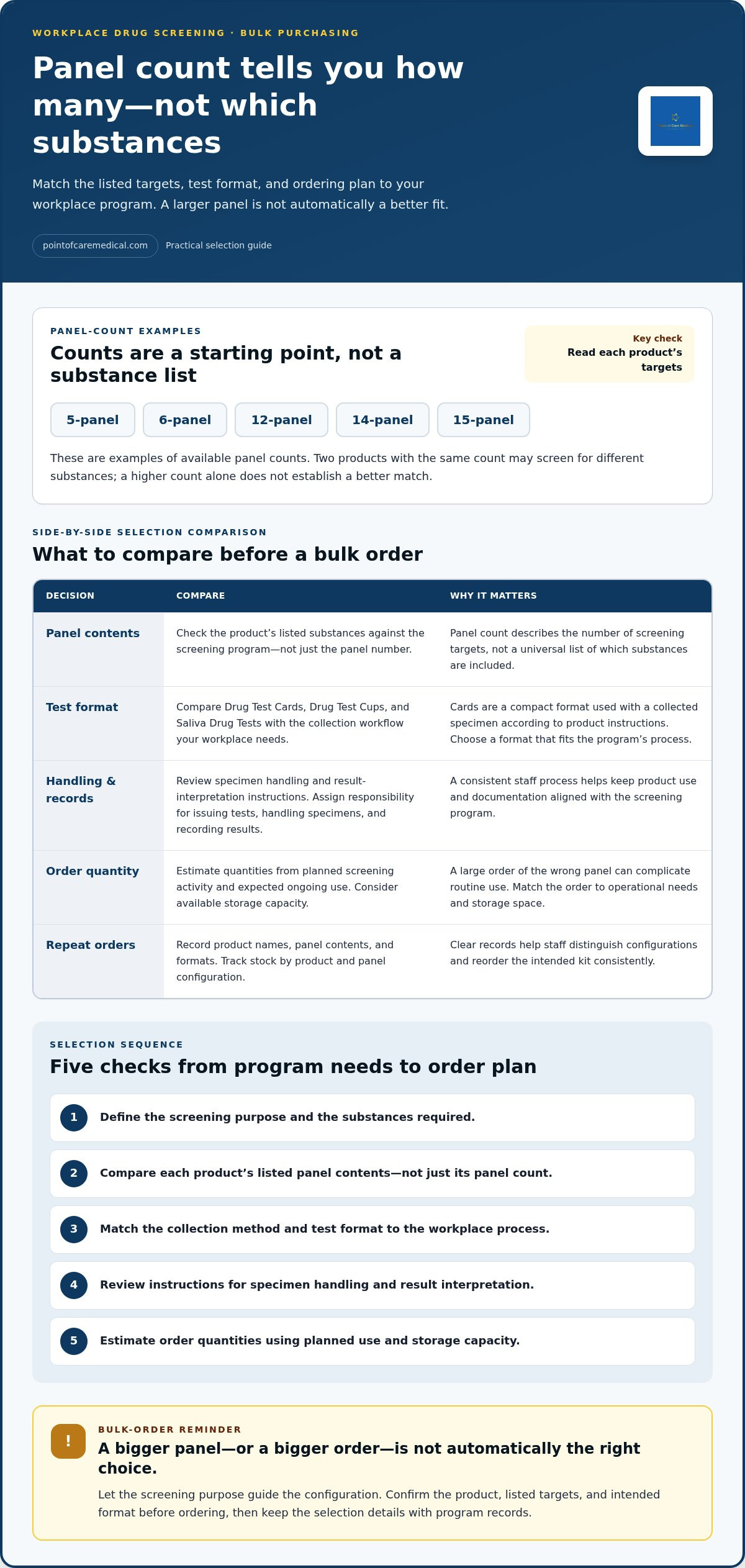
Use this selection sequence to narrow options:
- Define the screening purpose and the substances required.
- Compare each card’s panel contents, not just its panel count.
- Match the collection method to the workplace process.
- Review the instructions for specimen handling and result interpretation.
- Estimate order quantities from planned screening activity and storage capacity.
For example, an employer focused on a particular group of substances should choose a card that lists those targets. A broader panel may add coverage, but a higher count alone does not make it a better fit. Let the program’s purpose guide the choice, and record the selected configuration so repeat orders remain consistent.
Drug Test Cards also call for a clear internal process. Decide who issues the test, handles the specimen, and records results. Use the same product instructions across the team to reduce avoidable variation. Store cards by panel configuration and label their locations clearly.
Bulk purchasing makes product matching especially important: a large order of the wrong panel can complicate routine use. Before ordering, compare the product name, panel contents, and intended format with your program requirements. Then choose a quantity that supports expected use and fits available storage. This review helps maintain a consistent supply aligned with the screening purpose.
Drug testing for employers and safety-sensitive industries
Employers need a defined purpose, a suitable test format, and a consistent process. For safety-sensitive roles, document how screening fits the organization’s workplace policy.
Pre-Employment Screening
Pre-employment screening is part of hiring, so define when it occurs and which roles it covers. Match the selected panel to the substances named in the employer’s policy. Apply the same selection criteria to comparable positions, and keep applicant instructions and result-handling steps consistent across the hiring team.
Bulk Testing for Employers
Bulk orders can support employers with recurring screening needs across teams or locations. Estimate demand based on planned hiring and ongoing program use, then select a format and panel that fit. Before ordering, compare the product’s listed substances with the policy. Track stock by product and panel so staff can distinguish configurations and repeat the intended order.
Kit Regulation and Workplace Laws
There is no blanket answer for every kit: regulatory classification and other applicable requirements depend on the specific product and its intended use. Federal rules and state laws can also affect workplace testing, and requirements vary by jurisdiction and workforce. Set the testing policy with these distinctions in mind, including which employees it covers and how results are handled.
Document the policy, the test’s purpose, and the steps staff follow. Do not treat a kit label as a complete guide to workplace obligations. Apply the same documented process to comparable situations, and keep records that explain the decisions.
Accuracy and Detection Considerations
Urine, saliva, hair, and laboratory-based tests use different specimen types and workflows. Detection periods and performance depend on the specific test and substances covered, so compare product instructions rather than assuming one method fits every program. Screening results also require careful interpretation: a positive screen alone should not replace the employer’s documented review process.
For collection, assign trained staff to follow the kit instructions, identify the specimen correctly, and record each step. Store unopened kits as their labels direct, and keep results and related records secure. If a screening result is positive, follow the test’s instructions for arranging laboratory confirmation. Maintain the specimen and documentation according to the applicable process, then review the confirmed result under the workplace policy before taking action.
Carefully follow all test instructions. Compare each panel’s listed substances with the employer’s policy before selecting a product, and use the same selection criteria for comparable roles. Keep product and panel details alongside program ordering records to support repeat orders and distinguish configurations when purchasing workplace drug screening kits wholesale through Point of Care Medical.
Panel counts and drug configurations
A panel count describes the number of screening targets included. Compare the listed configuration with the substances your workplace program covers.
Panel Count Options
Available examples include 5-panel, 6-panel, 12-panel, 14-panel, and 15-panel formats. The count alone doesn’t identify the substances included. Check each product’s listed configuration before selecting an option. A 12-panel saliva test with alcohol, for example, differs from a 12-panel drug test cup by format and stated configuration.
Use the product description as the comparison point. A 5-panel option may suit a narrower program, while a 15-panel option lists more screening targets. That difference doesn’t make one configuration automatically preferable. First, map the substances named in your policy to the specific panel. Then compare only products that cover the intended targets.
Configurations may also identify added targets directly. One listed 14-panel cup includes EtG and fentanyl. That detail matters more than the panel number alone when a program specifically requires those targets. A 12-panel saliva test with alcohol is another example of a configuration that names an additional target. Record the exact product description to support consistent repeat ordering.
Multi-Panel Cup Configurations
Multi-panel cups combine multiple screening targets in one cup format. Examples include a 12-panel drug test cup and a 14-panel cup with EtG and fentanyl. Compare the named configuration, specimen format, and intended use together. The higher count doesn’t establish that every required target appears; confirm the product’s listed contents against the program.
For a practical review, build a short comparison table with three fields: panel count, named targets, and test format. Add a product only after its listed substances match the program’s needs. For example, distinguish the 12-panel saliva test with alcohol from the 12-panel cup. Similar counts don’t make the formats or configurations interchangeable.
Keep the selection process consistent across departments. Have the policy owner identify required targets, then have procurement compare product descriptions. Staff should recognize the chosen configuration from its packaging and ordering record. This reduces mix-ups between a 12-panel saliva option and a 12-panel cup during restocking. Keep separate records for each format and configuration.
Before placing a bulk order, review the full configuration rather than relying on a panel number in the product name. Compare the named targets, the cup or saliva format, and the program’s written requirements. If the intended coverage changes, update the selected configuration and purchasing record together. This makes selection more precise and supports consistent reordering.
Urine drug test cups
Urine test cups combine specimen collection with a defined screening configuration. For employers, compare panel contents, cup details, and case quantity before ordering.
Listed examples include 5-panel, 6-panel, 12-panel, and 15-panel cups. Some configurations also name adulterants or fentanyl. Those details distinguish products beyond the panel count. A 12-panel cup with fentanyl and adulterants, for example, has different stated coverage from a 6-panel cup with adulterants. Match the exact description to program requirements.
Capacity is another comparison point. The listed cup examples are 90 mL formats. Case quantities may also shape purchasing plans. One example is a case of 25 5-panel instant cups with adulterants. Other cases of 25 include 6-panel, 12-panel, or 15-panel 90 mL formats. Keep size and case quantity in the order record.
Check the configuration line by line. Confirm the panel count, named substances, and any listed adulterant feature. For example, don’t treat a 12-panel cup as identical to every other 12-panel option. One listed 12-panel example includes adulterants and fentanyl. Another may have a different stated configuration. The product description should guide selection.
Use a consistent purchasing checklist:
- Match the panel count to the written screening program.
- Compare named targets, including fentanyl or EtG when listed.
- Note whether adulterants are included in the description.
- Record the 90 mL size and case quantity when applicable.
Case ordering can support planned replenishment. A case of 25 creates a clear unit for inventory tracking. Record each case by panel configuration, rather than grouping every cup together. For example, separate 5-panel cups from 15-panel cups in purchasing records. This helps staff reorder the intended product and avoid substituting a different configuration.
Panel additions require careful review. A listed 14-panel cup includes EtG and fentanyl, while a listed 15-panel example includes adulterants and fentanyl. These descriptions show why the number alone isn’t enough. Compare named targets against the organization’s program, then retain the selected product details for repeat orders.
Before bulk purchasing, estimate use and available storage, then choose case quantities accordingly. Keep product descriptions accessible to procurement staff. When a program changes its target substances, review the cup configuration before the next order. This connects the selected urine cup and its listed contents with the employer’s documented screening needs.
Wholesale and bulk drug test orders
Bulk purchasing works best when quantities follow program needs. Compare format, configuration, and case size before ordering.
Bulk Order Options
Plan orders around expected use, storage capacity, and the selected test format. A case of 25 provides a defined unit for inventory planning. For example, listed cases include 25 tests in several urine cup configurations. Keep each configuration separate in purchasing records to support accurate reordering.
Build a simple order schedule from hiring activity and ongoing screening plans. Track stock by format and panel, then reorder the specific configuration used. Avoid combining different panel counts in one inventory entry. A 12-panel cup and a 5-panel saliva test need distinct records, even if both support the same program.
Wholesale Workplace Kit Types
Wholesale options include urine drug test cups, dip cards, and oral fluid tests. Saliva formats include listed 5-panel, 10-panel, and 12-panel configurations. Cup examples include 12-panel and 14-panel options. Match the format and named configuration to your program rather than treating all kits as interchangeable.
For example, listed cup cases include 25 tests in 5-panel, 6-panel, 12-panel, and 15-panel configurations. Some descriptions name adulterants or fentanyl; another names EtG and fentanyl. These distinctions affect product selection. Compare the exact contents and format before placing a repeat order.
Use a purchasing worksheet to reduce ordering errors. Record the test format, panel count, named targets, case quantity, and intended workplace use. Copy the product description into the ordering record. This helps procurement teams distinguish similar configurations across departments or locations.
Separate planned demand from the quantity held in storage. Hiring cycles can change order needs, while routine programs draw from continuing stock. Use past usage records and upcoming screening plans to estimate replenishment needs. Consider available storage, especially when ordering multiple formats or panel configurations.
Before finalizing a bulk order, compare the selected products with the written screening program. Check that case quantities suit expected use and named targets match the intended configuration. Then establish a consistent inventory method for receiving, storing, and reordering each type. Clear records support continuity without relying on panel count alone.
Use this framework to organize your testing procurement around format, configuration, and planned demand.
Use the listed amount as a product-specific reference when comparing this option with other formats in your purchasing plan. Check that the product name and format match the screening need before including the amount in a budget estimate. Tie the estimate to the selected configuration, and record product changes before submitting an order.
For repeat purchasing, compare the same configuration and intended use with the inventory record so replenishment decisions do not rely on price alone. Checking the product description, format, and stock helps keep each order aligned with program needs. If the selected format changes, update the purchasing record so the next order reflects what is required.
Point of Care Medical: GenBody COVID-19 Rapid Antigen Test
Point of Care Medical offers the GenBody COVID-19 Rapid Antigen Test for workplaces managing respiratory testing alongside employee screening programs. For drug testing needs, its Rapid Test Cup "RTC" + Fentanyl provides a related testing option. These products address different testing purposes, so select each according to the workplace program it supports.
Point of Care Medical also offers the ViraDx™ SARS-CoV-2/Flu A+B Rapid Antigen Test and SURE CHECK HIV 1/2 Assay. These offerings can support organizations seeking rapid testing across distinct health needs, separate from workplace drug screening. Align the product choice with the intended use and testing workflow.
Contact Point of Care Medical to discuss its testing products.
Make your next order part of a clear process
Make kit selection a repeatable procurement practice. Keep approved product details, intended screening use, and ordering records together. Assign responsibility for reviewing the program and updating purchasing instructions when workplace needs change. This gives procurement and screening staff a shared reference before the next order.
A plan for workplace drug screening kits wholesale should connect each order to the organization’s screening requirements. Review selected products against those requirements, then document changes before replenishing stock. This keeps purchasing organized without relying on panel count or product format alone.
Point of Care Medical offers diagnostic products for distinct testing needs. If you’re planning your organization’s testing procurement, visit Point of Care Medical to explore its offerings. Take the next step with a clear purchasing process and a product choice that fits your intended use.
Frequently Asked Questions
Which substances do workplace drug test kits screen for, and how many panels are available?
Configurations vary, and panel count alone doesn’t identify every substance screened. Examples include 5-, 6-, 10-, 12-, 14-, and 15-panel options. Product descriptions may specifically identify fentanyl, EtG, alcohol, or adulterants. For instance, a 14-panel cup may list EtG and fentanyl, while a 12-panel saliva configuration may include alcohol. Compare named targets with your program’s requirements before selecting a configuration.
What are current wholesale prices and minimum order quantities for workplace drug screening kits?
Pricing depends on the products, quantities, and configurations requested. Organizations sourcing workplace drug screening kits wholesale can request a personalized quote by submitting selected products and quantities. Point of Care Medical reviews the request and provides pricing based on those details. A case pack, such as a case of 25 tests, describes that package example. It doesn’t establish a universal minimum order quantity for every product.
Which wholesale suppliers offer workplace drug screening kits in the United States?
Point of Care Medical supplies professional and workplace testing teams across the United States. Its product categories include Drug Test Cups, Drug Test Cards, and Saliva Drug Tests, with fixed and configurable panel options. When comparing workplace drug screening kits wholesale, consider format, panel configuration, and intended use. Product availability and regulatory classification can vary by configuration. To receive personalized pricing, submit a quote request with your products, quantities, and configuration notes.
Do workplace drug screening kit requirements differ for DOT-regulated employers?
Yes. Employers should distinguish general workplace screening from testing under a DOT-regulated program. A kit selected for one purpose does not automatically fit another. Identify the applicable program and procedures before choosing products, then consider the product’s configuration and regulatory classification. Keep purchasing decisions aligned with the employer’s written process and the requirements that apply to the role.


