

Reliable procurement starts with workflow fit, not panel count. When you’re buying wholesale drug testing supplies, choose products by how your organization collects specimens, what it needs to screen for, and how it manages repeat purchasing.
Panel coverage and per-unit cost are useful comparison points, but they are only part of the decision. A product that doesn’t align with your collection process or screening requirements can complicate routine operations. Define the intended use first, then compare product categories and screening targets against that workflow.
This 2026 buyer’s guide offers a practical framework for making those decisions. You’ll learn which criteria to set before purchasing, how to compare urine-cup and oral-fluid options, and what to include in a consistent procurement process. It also explains how Point of Care Medical’s Rapid Test Cup RTC with Fentanyl and oral fluid tests fit organizational screening needs. Use the guide to narrow a broad product search to supplies that support your program’s day-to-day requirements.
Key Takeaways
- Choose wholesale drug testing supplies by matching the collection format and screening targets to your organization’s workflow.
- Use a five-step evaluation process to define intended use, review product instructions and documentation, and plan replenishment.
- Compare urine-cup and oral-fluid options by collection process, setting, staff responsibilities, and purchasing needs, not panel count alone.
- Build a procurement checklist that assigns purchasing responsibilities and sets storage procedures and reorder triggers.
- Consider how Point of Care Medical’s Rapid Test Cup RTC with Fentanyl and oral fluid tests fit different organizational screening needs.
Wholesale drug testing supplies: start with your screening workflow
Institutional buyers need products that fit their screening process, clear purchasing criteria, and workflows staff can follow consistently. Start by defining the process rather than choosing the largest panel or trying to use one kit for every situation. Wholesale drug testing supplies are screening products purchased for an organization’s use. They may use different specimen formats and screening targets, so selection should reflect the organization’s actual requirements.
Keep procurement decisions distinct from clinical interpretation, employment policy, and confirmatory testing. A screening product is one part of a broader process. Your organization’s procedures should determine how results are handled and what steps follow. For an overview of the types of drug tests and their applications, review the different testing methods before comparing supply categories.
Which organizations procure drug testing supplies?
Healthcare providers may procure supplies for patient-facing screening workflows. Treatment centers may have specific collection and documentation procedures. Screening facilities need products that fit their services and staff responsibilities. Employers may coordinate screening through workplace policies and established procedures.
These settings can differ in where specimens are collected, who handles them, what records are maintained, and how results are routed. A urine cup and an oral-fluid test involve different collection formats, and neither is automatically right for every organization. Point of Care Medical offers a Rapid Test Cup RTC with Fentanyl and oral fluid tests. These categories can help buyers start mapping products to a defined workflow.
What should a buyer define before comparing products?
First, write down the screening purpose and collection setting. Then identify who will use the product, which staff steps are involved, and the population being screened. These details help distinguish essential requirements from preferences before you compare panels or product categories.
Use this checklist to frame the purchasing discussion:
- Screening purpose: Define the organizational use and the decision the screening process supports.
- User setting: Record where collection takes place and who is responsible for each step.
- Specimen workflow: Identify the collection format that fits the setting and staff process.
- Panel needs: Separate required screening targets from optional coverage. A broader panel is not automatically a better fit.
- Purchasing cadence: Estimate routine demand and set an internal schedule for reviewing stock and placing replenishment orders.
Account for applicable organizational policies and regulations when defining product requirements. Review product instructions and intended-use information during selection, then use them to inform staff procedures. Keep these procurement checks separate from decisions about interpretation, employment actions, or confirmatory testing. A written workflow gives purchasing teams a practical basis for comparing options and maintaining a consistent supply process.
How to evaluate wholesale drug testing supplies before ordering
A consistent review process helps purchasing teams compare products against operational needs instead of relying on panel size or catalog labels alone. Use the same sequence for each option to assess product fit, staff responsibilities, and ongoing purchasing needs.
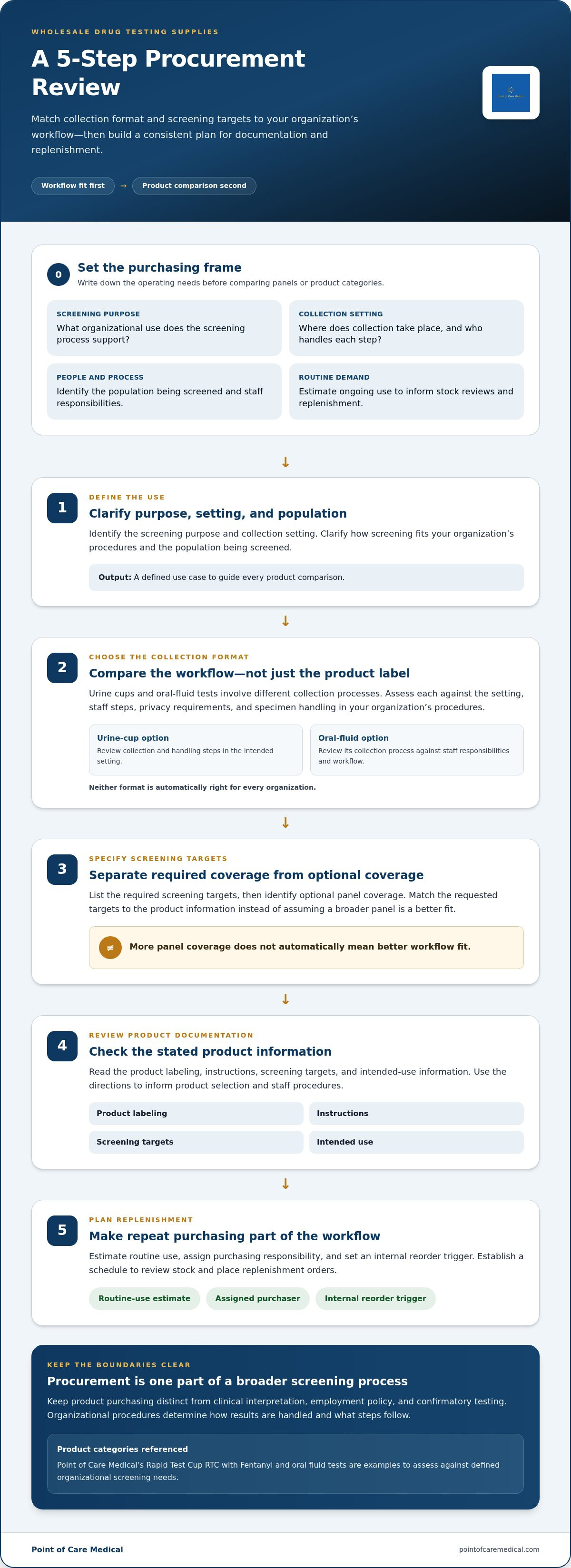
Evaluation sequence: define the use, choose a collection format, specify screening targets, review product documentation, and plan replenishment.
- Define the use. Identify the screening purpose, setting, and population. Clarify how screening fits your organization’s procedures.
- Choose the collection format. Compare specimen collection and handling with the staff workflow and setting. Urine cups and oral-fluid tests involve different collection processes, so assess each against your operational requirements.
- Specify screening targets. Separate required substances from optional panel coverage. Match the requested targets to the product information rather than assuming more targets automatically mean a better fit.
- Review documentation. Read the product labeling, instructions, screening targets, and intended-use information. Use those directions to inform selection and staff procedures.
- Plan replenishment. Estimate routine use, assign purchasing responsibility, and set an internal reorder trigger. Consistent criteria help teams compare products and avoid unnecessary changes to established procedures.
Match the collection format to the use case
Start with the collection setting. Consider where collection occurs, the privacy requirements of the process, which staff members are involved, and how the specimen is handled under organizational procedures. Urine-cup and oral-fluid workflows have different collection steps. Review the instructions and staff process for each instead of assuming one format is universally preferable.
Teams evaluating oral-fluid options can use Oral Fluid Drug Test Kits: 2026 Buyer’s Comparison Guide as a companion to this workflow review.
Review product information and organizational requirements
Check that the product’s stated screening targets and intended-use information align with your planned workflow. Then consider how internal procedures address collection, documentation, result handling, and any next steps. Product selection does not replace decisions about clinical interpretation, employment policy, or confirmatory testing.
Regulatory terms also need careful handling. CLIA waiver status and FDA clearance are distinct concepts, so don’t treat one as proof of the other. The guide titled CLIA-Waived & FDA-Cleared can help frame that distinction. The FDA’s Drug Supply Chain Security Act resource concerns applicable drug supply-chain requirements. It should not be read as a blanket rule for every screening supply.
Once requirements are documented, compare catalog options against them and build a repeatable purchasing process. Point of Care Medical’s organizational screening supplies include urine-cup and oral-fluid categories for buyers assessing workflow needs.
Urine cups or oral-fluid tests: compare the workflow, not just the panel
Urine cups and oral-fluid tests support different collection processes. Compare how each format fits your setting, staff roles, specimen-handling procedures, and purchasing plan. Neither specimen type is universally more accurate, convenient, or suitable. Start with your organization’s defined screening needs, then assess the product instructions and screening targets for each option.
The comparison below highlights questions to include in a procurement review. It isn’t a product ranking.
| Consideration | Urine-cup workflow | Oral-fluid workflow |
|---|---|---|
| Collection workflow | Review the collection steps and specimen handling described in the product instructions. | Review the collection steps and specimen handling described in the product instructions. |
| Setting | Consider the collection location and how it supports the organization’s procedures. | Consider the collection location and how it supports the organization’s procedures. |
| Staff process | Identify who prepares the process, guides collection, and documents the required information. | Identify who guides collection and documents the required information. |
| Procurement | Match screening targets and replenishment plans to expected organizational use. | Match screening targets and replenishment plans to expected organizational use. |
Panel coverage is a separate decision from specimen format. List required screening targets first, then distinguish them from optional coverage. A larger panel may not match your defined need. Compare product labeling and intended-use information rather than relying on a category name alone.
When a urine-cup workflow may fit
Evaluate how cup-based collection fits your organization’s collection space, staff responsibilities, documentation steps, and specimen-handling procedures. For example, map who oversees each stage and how staff will follow product instructions before establishing a routine purchasing process. Point of Care Medical offers the Rapid Test Cup RTC with Fentanyl. For product-specific considerations, see Rapid Test Cup with Fentanyl: 2026 Buyer’s Guide.
When to evaluate an oral-fluid workflow
For oral-fluid testing, examine the collection sequence, setting, staff instructions, and specimen-handling steps. Consider whether those steps fit existing procedures and how the organization will document collection. Point of Care Medical also offers oral fluid tests. Buyers assessing this format can consult Oral Fluid Drug Screen Supplier: A 2026 Procurement Guide for focused procurement considerations.
For wholesale drug testing supplies, document why you selected a format and which screening targets it must address. That record gives purchasing and screening teams a consistent basis for comparing products without treating either collection type as the default for every workflow.
Build a practical wholesale drug testing supply procurement checklist
A repeatable purchasing process keeps supply decisions aligned with screening operations. It also clarifies who owns each task, from approving a product to monitoring stock. Treat procurement as an operational system, not a one-time product selection.
Estimate demand based on your organization’s screening activity and planned changes. Avoid relying on a fixed inventory target that may not fit your usage or product. Set a reorder trigger your team can apply consistently, such as a review point tied to stock checks or purchasing cycles. Follow product-specific storage instructions rather than assuming all supplies have the same requirements.
Coordinate purchasing with screening operations
Assign clear owners for product approval, ordering, receipt, and stock management. In smaller teams, one person may handle several tasks, but each responsibility should still be explicit. This reduces gaps when staff change or purchasing duties are shared across departments. Employers developing workplace procedures may also find the practical discussion in Rapid Drug Test Kits for Employers: A Practical Guide useful when coordinating supply decisions with screening activity.
Procurement and clinical or screening leads should review requirements together. Keep product selection separate from organizational rules for administering screens, interpreting results, and deciding what actions follow. Those policies guide how the organization uses screening supplies, but they do not replace the product’s instructions or intended-use information.
Keep procedures and product records organized
Keep current product instructions and relevant documentation with the procedures staff use. When a product changes, record the decision and update affected procedures through the organization’s established process. This gives purchasing staff a reference point and helps operational teams work from the same product information.
Use this checklist during a joint review by procurement and clinical or screening leads:
- Demand estimate: Review usage patterns and planned screening activity to inform purchasing needs.
- Approved product requirements: Document the required collection format, screening targets, and intended-use criteria.
- Purchasing ownership: Name the people responsible for product approval, ordering, receiving, and stock oversight.
- Storage procedures: Align storage and handling practices with the product instructions.
- Reorder triggers: Define who checks stock, when a review occurs, and how a replenishment need is recorded.
- Procedure records: Track product decisions and changes using the organization’s established documentation process.
For detailed compliance questions, consult the dedicated regulatory guidance article and the requirements applicable to your organization. A checklist supports purchasing consistency, but it doesn’t determine regulatory obligations or replace clinical, employment, or screening policies.
Use these criteria to guide ongoing procurement of wholesale drug testing supplies and keep purchasing connected to actual workflow needs. Explore Point of Care Medical’s toxicology supplies as you assess urine-cup and oral-fluid categories for your organization.
Source wholesale drug testing supplies through Point of Care Medical
Once your organization has defined its screening purpose, collection workflow, product-information requirements, and purchasing process, use those criteria to narrow the options. This keeps decisions grounded in operational fit rather than panel count alone. Point of Care Medical distributes rapid diagnostic supplies to healthcare and screening organizations across the United States, including toxicology products in urine-cup and oral-fluid categories.
Approach the catalog with a short procurement brief. Note which collection format your workflow calls for, which screening targets are required, and what product instructions or intended-use information your team needs to review. These points help purchasing and screening leads assess relevant options without assuming one product suits every program.
Match toxicology offerings to buyer needs
Organizations evaluating a cup option that includes fentanyl can consider Point of Care Medical’s Rapid Test Cup RTC with Fentanyl. Tie the evaluation to your defined screening targets and the product’s own information. For teams assessing oral-fluid collection, Point of Care Medical also offers oral fluid tests. In either case, review product details against your procedures instead of assuming panel coverage, certifications, or performance characteristics that are not stated in the product information.
These two categories give buyers a practical starting point for aligning supply selection with the collection process. They don’t replace decisions about how screening is administered, how results are interpreted, or what follow-up procedures apply. Keep those responsibilities within the organization’s established clinical, employment, and screening policies.
Take the next procurement step
Before selecting a category, assemble the details that will guide purchasing and internal review:
- Screening purpose: State what the organization needs the screening process to support.
- Format preference: Identify whether a urine-cup or oral-fluid workflow aligns with the collection setting and staff process.
- Product information: Specify the screening targets and documentation your team needs to evaluate.
- Purchasing plan: Record who approves, orders, receives, and monitors supplies under your internal process.
This concise brief connects the catalog to day-to-day requirements. It also gives the people responsible for screening and procurement a shared basis for reviewing product fit and maintaining a consistent approach to repeat purchasing. Keep product instructions with the procedures staff use, and handle policy or compliance questions through the organization’s established review process.
For organizations sourcing wholesale drug testing supplies, a workflow-first review is a practical way to identify relevant categories before making a purchasing decision. Explore Point of Care Medical’s testing supplies and use your procurement criteria to determine the next step for your program.
Put your procurement criteria into action
Turn your screening requirements into a brief that purchasing and program leads can use together. Record the intended workflow, collection format, required screening targets, product information needed for review, and the person responsible for each purchasing task. Keep the brief available for future reviews so product decisions stay connected to how your organization operates.
This approach makes it easier to assess wholesale drug testing supplies without letting a broad catalog or panel count drive the decision. It also gives your team a consistent starting point when screening needs or purchasing responsibilities change. Review available categories against your criteria, then follow your organization’s established process for product approval and ordering.
Point of Care Medical serves healthcare and screening organizations nationwide. Explore Point of Care Medical’s drug testing supplies to identify options that align with your procurement needs. A clear brief can make the next purchasing decision more focused and manageable.
Frequently Asked Questions
What are wholesale drug testing supplies?
Wholesale drug testing supplies are screening products organizations purchase for use in healthcare, treatment, workplace, or other screening programs. The category can include different specimen formats and screening targets, so match each product to a defined operational use. For example, a clinic reviewing a urine-cup option and a program considering oral-fluid collection may need different product information and procedures. Use labeling and intended-use details to guide evaluation.
How do I choose the right drug testing supplies for my organization?
Choose supplies by mapping the product to the task staff need to perform. Identify where collection occurs, who handles the process, and how the organization documents it. Then compare the product’s stated screening targets with your written requirements. Include the staff who will use or manage the supplies in the review. This helps narrow wholesale drug testing supplies to options that fit the organization’s established workflow.
Are oral-fluid tests or urine cups better for organizational screening?
Neither format is automatically better for every organization. Assess how each collection process fits your setting, staff roles, privacy procedures, and specimen-handling practices. A workflow that works in one facility may not transfer directly to another. Review the specific product instructions and screening targets before choosing. For example, consider whether your collection area and documentation process accommodate the steps described for the product under review.
Can I buy drug testing supplies in bulk for a clinic or treatment center?
Organizations can plan bulk purchasing around expected screening activity and internal stock procedures. Before placing an order, document the approved product category, screening targets, and person responsible for purchasing. Review the ordering terms for the products being considered, then coordinate receiving and stock tracking with the team that uses the supplies. A demand estimate based on the clinic’s own operations is more useful than selecting quantities from a general category label.
What should I check before ordering drug test cups with fentanyl detection?
Review the product’s stated screening targets, instructions, and intended-use information, then compare them with your collection procedures. Don’t assume a general description identifies every panel component or regulatory status. Point of Care Medical offers the Rapid Test Cup RTC with Fentanyl for organizations evaluating this category. Make sure the staff responsible for screening understand the product directions and the organization’s process for documentation and follow-up.
How can an organization keep drug testing supply procurement consistent?
Use a shared record of approved products, purchasing responsibilities, and internal receiving procedures. When a product changes, document the decision and update the materials staff use so purchasing and screening teams work from the same information. Set reorder reviews according to your organization’s usage and stock practices. This creates a repeatable process without relying on a generic inventory quantity or schedule that may not fit your needs.


