

What if a fast screening result is only the first step in a responsible workplace testing process? Rapid drug test kits for employers can support timely screening, but a kit alone doesn’t define the program. Start by documenting why screening is conducted, then choose a specimen type and panel that fit that purpose. Set consistent procedures for collection, result handling, and follow-up. A non-negative rapid screen is preliminary, not a confirmed result.
An efficient process should also respect employees and protect sensitive information. This guide explains where rapid screening fits, how urine and oral fluid differ in practical use, and how to manage documentation and follow-up. It also shows how to match panel coverage to your program’s needs and why non-negative results require appropriate review before action. These principles apply across workplace screening supplies, including rapid test cups and oral fluid tests.
Key Takeaways
- Use rapid drug test kits for employers as an initial screening tool within a written program, not as a substitute for clear policy and procedures.
- Match urine or oral fluid testing and panel coverage to the documented screening purpose. Detection windows can vary.
- Interpret negative, non-negative, and invalid results according to the specific kit’s instructions. Treat a non-negative screen as preliminary and follow the program’s review process.
- Build a repeatable workflow for collection, handling, timing, result reading, documentation, and review.
- Consider rapid test cups with fentanyl detection and oral fluid tests in relation to your organization’s screening needs.
How rapid drug test kits fit into an employer screening program
Rapid drug test kits for employers can provide an initial screening step within a workplace program. They don’t define the program’s purpose, determine who is tested, or decide what happens after a result. Those decisions belong in written procedures that explain when screening may occur, how collection is handled, and how outcomes are reviewed. An employer-directed screen serves a workplace policy. It is not a clinical diagnostic test used to diagnose or guide treatment for an individual.
An initial screen provides a preliminary result under the kit’s instructions. Follow-up testing is a separate step used to review or verify that finding. This distinction helps prevent a quick screening outcome from being treated as a complete decision. Employers can consult an overview of types of drug tests and their applications, then define program procedures around documented needs and applicable requirements.
Which workplace situations may use rapid screening?
Pre-employment screening, post-incident testing, and other policy-defined situations are possible examples, not universal reasons to test. Specify which situations the program covers and apply the same written criteria consistently. For example, a policy can define the circumstances and steps for post-incident screening, rather than leaving each supervisor to make an ad hoc decision.
Before using a kit, align its intended use and instructions with the program’s purpose. A screening result does not establish whether an employee was impaired at work. It also does not, by itself, show when a substance was used or establish that a workplace rule was breached. Keep those questions separate from the screening step.
What rapid screening can and cannot tell an employer
A rapid screen reports a preliminary finding based on the specimen, panel, and interpretation criteria described in the specific test’s instructions. A negative result means the screen did not indicate a finding under those conditions. A non-negative result calls for review under the employer’s procedures; it is not a confirmed result. An invalid result means the test did not produce an interpretable outcome as defined by its instructions.
None of these outcomes independently establishes workplace conduct, impairment, or a policy violation. Consider the result in context, including whether collection and testing followed the instructions and whether the correct procedure was used. Keep the initial result distinct from any separate confirmation or review process required by the program or applicable rules. Avoid taking employment action based only on an unreviewed preliminary result.
Build these distinctions into the written workflow: identify who may initiate screening, who records the result, how non-negative or invalid outcomes are referred for review, and how decisions are documented. This creates a consistent process for employees and administrators while preserving the limited role of the rapid screen. The test supports the program’s stated purpose; it does not replace policy, review, or judgment.
How to choose urine or oral fluid rapid drug test kits
Choose a specimen format that fits the written program, collection setting, and intended screening purpose. Urine and oral fluid tests have different collection workflows, so compare how each can be administered, handled, and documented in your workplace. Consider privacy and facility needs alongside the test’s instructions. A format that is practical in one setting may not suit another.
Panel coverage matters as much as specimen type. Start with the substances named in the organization’s policy, then match that scope to the specific kit’s panel and intended use. Don’t assume two tests with the same specimen type cover the same substances or use identical interpretation criteria. Review the current instructions before adopting a kit or changing a procedure.
- Collection: Consider where and how the specimen will be collected, and who is responsible for following the instructions.
- Privacy and handling: Plan a consistent, respectful collection process and appropriate specimen handling.
- Program fit: Align the specimen and panel with the documented reason for screening.
Detection windows can vary by substance, test design, and individual factors. Specimen format alone can’t guarantee that a test will detect use within a particular period. Use the kit’s intended-use information and your program requirements to guide selection. These considerations help employers choose rapid drug test kits for employers without treating one format as a universal solution.
When might an employer consider urine screening?
Urine may suit a program whose documented purpose and collection setup align with that specimen type. Plan where collection will occur, how privacy will be managed, and how the specimen will be handled according to the kit instructions. Then confirm that the panel covers the substances specified in the policy. Don’t infer a detection period or performance level from the specimen type alone.
Use the test’s instructions to define collection and result-reading steps. If the workplace setting makes those steps difficult to apply consistently, account for that before selecting the format.
When might an employer consider oral fluid screening?
Oral fluid has a different collection format, with its own instructions for obtaining and handling a specimen. Consider whether the collection process fits the program’s intended use, staffing, and privacy procedures. The assay instructions and applicable program requirements determine appropriate use. The specimen format by itself doesn’t establish suitability or a detection window.
For a closer look at sourcing and selection considerations, consult the related Oral Fluid Drug Test Kits: 2026 Buyer’s Comparison Guide. Point of Care Medical supplies oral fluid tests and rapid test cups with fentanyl detection. Explore these workplace toxicology screening supplies in relation to your documented specimen and panel needs.
How employers should interpret rapid drug screening results
Read each result using the specific kit’s instructions. A negative result means the test did not indicate a finding under its stated criteria. A non-negative result means the initial screen indicated a finding that needs review under the program’s procedures. An invalid result means the test did not produce an interpretable outcome as defined by its instructions. These labels are not interchangeable, and they don’t have the same next steps.
A rapid screening result alone cannot establish whether an employee was impaired at work. A screen reflects a preliminary finding for the specimen and panel tested. It does not, by itself, establish when a substance was used, workplace conduct, or a policy violation. Keep interpretation separate from decisions about employment.
For organizations using rapid drug test kits for employers, establish who reviews results and how each outcome moves through the documented process. Follow the kit instructions, written policy, and applicable requirements. If the program calls for confirmation or another form of review, treat that as a distinct step rather than presenting the rapid screen as a final determination. Record the initial outcome and any subsequent review separately.
- Negative: Record the outcome as directed by the kit and program.
- Non-negative: Pause routine interpretation and refer the result through the established review pathway.
- Invalid: Follow the instructions and written procedure for an uninterpretable test.
What should happen after a non-negative result?
Don’t treat a non-negative screen as confirmation. Pause routine interpretation, secure the relevant records, and follow the employer’s documented review pathway. Depending on program rules or applicable requirements, that pathway may call for separate confirmatory testing and review before a decision is considered. Avoid promising a particular outcome or taking a universal employment action based only on the initial screen.
Make the next step clear in advance: identify the responsible reviewer, the records to retain, and how the employee will be informed. A consistent process reduces ad hoc decisions.
How should employers handle invalid or unclear results?
Use the kit instructions and written program to determine whether a repeat test or another procedure is appropriate. Don’t guess at an unclear result or record it as negative or non-negative without support from the test’s criteria. Document the outcome, relevant collection or procedural details, and the action taken under the established process.
Keep communication factual, confidential, and limited to appropriate personnel. Share only the information needed to explain the process and next step. This supports consistent administration while protecting employee privacy and maintaining a clear record for review.
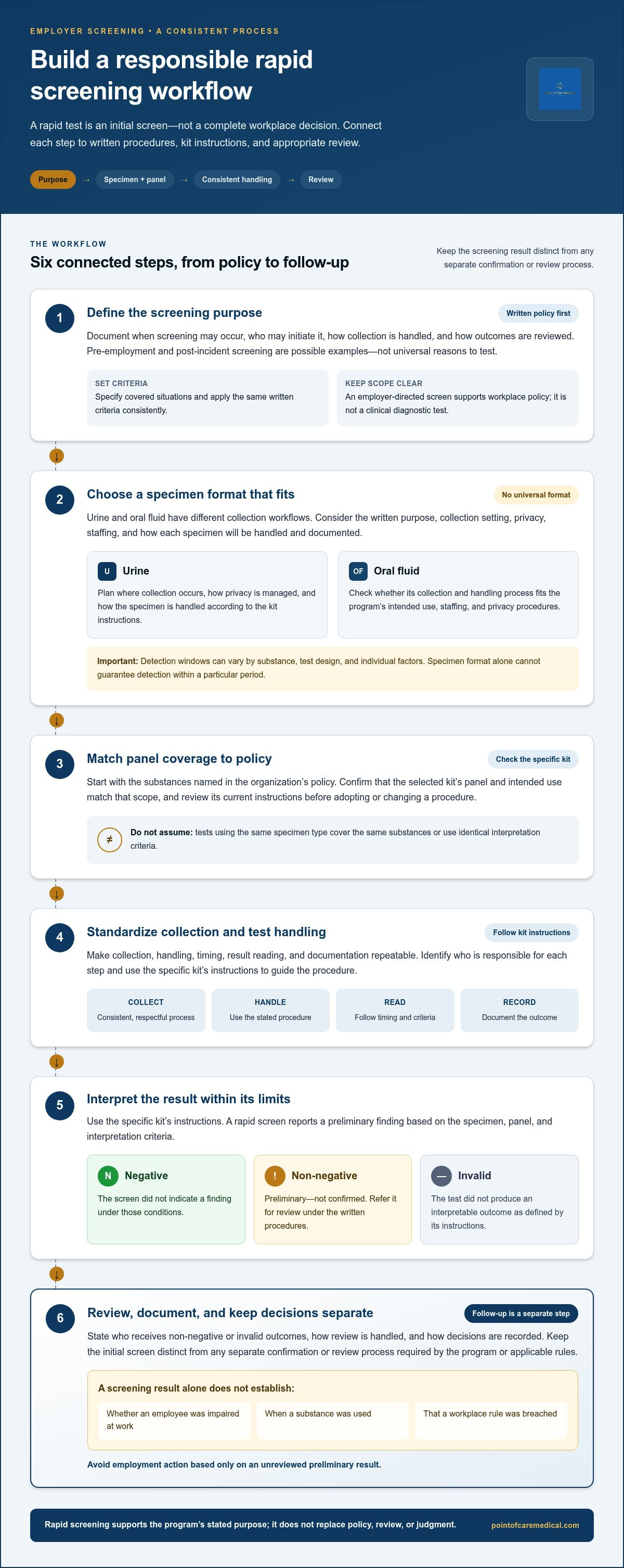
How to build a consistent rapid drug testing workflow
A repeatable process helps employers apply their written program consistently, from deciding when screening is appropriate to documenting what happens next. Use this sequence as an operational framework, then adapt it to the organization’s policy, the selected kit instructions, and applicable requirements. Federal, state, local, and role-specific rules may differ, so verify which requirements apply to your workplace before implementing procedures.
- Define the program scope. Document the purpose of screening, the circumstances in which it may occur, the specimen type and panel that align with that purpose, and the review and follow-up pathway. Set consistent criteria instead of relying on informal decisions.
- Assign responsibilities. Identify who authorizes a test, who conducts collection, who reads and records the result, and who handles review or follow-up. Limit access to employee information to personnel with an appropriate role.
- Prepare personnel and materials. Train designated staff on the selected test’s instructions, required timing, result interpretation, handling, and recordkeeping. Keep current instructions available where testing takes place, and use the same procedure for comparable situations.
- Conduct the test as instructed. Follow the kit’s specific steps for collection, specimen handling, timing, and result reading. Don’t substitute assumptions from another test or specimen format. Record any procedural issue that could affect interpretation.
- Record and route the outcome. Document the required test details and outcome category. Route non-negative, invalid, or otherwise unclear results through the written review process, and keep any separate follow-up records distinct from the initial screen.
- Review and maintain the process. Check records for completeness, restrict access, and review procedures when the policy, selected test, or applicable requirements change. Address gaps through staff guidance and documented process updates.
Prepare the policy, personnel, and testing materials
Before screening begins, make the written policy practical to follow. It should state the program purpose, testing circumstances, assigned responsibilities, documentation steps, and how different outcomes move to review. Train staff on the selected kit rather than relying on general familiarity with testing. Consistent instruction reduces variation in collection and result recording. Use appropriate safeguards for employee information, including controlled access and clear rules for handling records.
Document collection, results, and follow-up
Create a record that captures the information required by the program and kit instructions, such as the test and panel used, collection details, result category, date, responsible personnel, and any procedural issue. Keep preliminary results separate from confirmation records and final decisions. For panel-specific supply planning, the rapid fentanyl test cup buyer’s guide can help frame purchasing around documented program needs. Point of Care Medical distributes rapid test cups with fentanyl detection. Explore workplace toxicology screening supplies to support your kit selection process.
How Point of Care Medical supports employer drug screening
Procurement works best when it follows the employer’s documented use case. Define the screening purpose, collection setting, panel needs, and staff responsibilities first. Then select supplies whose specimen format and current instructions align with that workflow. A kit supports the program’s testing process; it doesn’t create policy or determine what an employer should do with a result.
Point of Care Medical distributes toxicology screening supplies to organizations across the United States, including rapid test cups with fentanyl detection and oral fluid tests. These categories give employers options to consider against their documented requirements. Product instructions, panel contents, intended use, and applicable requirements should guide selection and implementation.
Match screening supplies to the documented use case
For a program using urine collection, consider whether a rapid test cup fits the collection setting and staff procedures. Point of Care Medical’s Rapid Test Cup RTC includes fentanyl detection. Review its current panel information and instructions against the substances and workflow specified in your policy. Don’t assume that a category name alone describes every test detail.
Oral fluid tests offer a different specimen format, with distinct collection and handling instructions. Compare those requirements with the intended screening situation and established procedures. For a deeper discussion of format considerations, consult the Oral Fluid Drug Test Kits: 2026 Buyer’s Comparison Guide.
Plan a practical next step for procurement
Before purchasing, write down the operational details that will affect routine use. A short procurement checklist can help teams compare supplies consistently and identify gaps before implementation:
- Specimen format: Identify whether the written program calls for urine or oral fluid and consider the collection environment.
- Panel needs: Match the policy’s documented screening scope to the test’s stated panel information.
- Workflow: Outline who collects, handles, reads, and records the test, along with the applicable instructions.
- Review pathway: Specify how staff route results for review and keep preliminary findings distinct from later records.
Have designated personnel review the relevant product instructions before use. Ensure that collection, handling, timing, result interpretation, and recordkeeping procedures align with those instructions and the employer’s program. Keep procurement decisions connected to the written process so the selected format and panel serve a defined workplace purpose.
For employers assessing rapid drug test kits for employers, Point of Care Medical’s rapid test cups with fentanyl detection and oral fluid tests are relevant toxicology supply categories to consider. Review workplace toxicology screening supplies as you plan your procurement needs.
Make your screening process ready for the next review
A workplace testing process should remain usable as teams, roles, and operational needs change. Set a review point for your procedures so staff can identify unclear instructions, inconsistent records, or handoffs that need attention. Small, documented refinements can keep the workflow practical without changing its stated purpose.
Before your next procurement decision, align the policy, collection process, result review, and staff responsibilities. Then compare supplies against those documented needs. This keeps rapid drug test kits for employers in their proper role: supporting a defined screening process rather than standing in for one.
Explore Point of Care Medical’s toxicology screening supplies as you plan your next step. A clear process and well-matched supplies give your team a practical foundation for moving forward.
Frequently Asked Questions
How do rapid drug test kits for employers work?
Rapid drug test kits for employers screen a specimen for selected drugs or metabolites and provide a preliminary result according to the product instructions. Specimen type, substances included in the panel, collection steps, and read time vary by test. Staff should follow the instructions for the exact kit on hand rather than rely on a process learned for another model. The employer’s written program governs how results are recorded and reviewed, including any separate confirmation.
Are rapid drug test results sufficient for an employment decision?
No. An onsite screening result shouldn’t automatically be treated as a final finding. A non-negative result may need confirmation or additional review under the employer’s policy and applicable requirements. Apply the same review pathway to comparable cases, and restrict result records to appropriate personnel. A drug screen also doesn’t prove that someone is currently impaired. Consider the test outcome within the program’s full decision process, not as a standalone measure of workplace conduct.
Should employers use urine or oral fluid drug tests?
Neither specimen format is the best choice for every workplace. Compare collection workflow, specimen handling, privacy needs, available panel coverage, and the program’s stated purpose. Also consider whether designated staff can follow the specific test instructions consistently in the setting where collection will occur. Detection periods depend on multiple factors, so don’t promise a particular window based only on specimen type. Use product-specific instructions and applicable requirements to guide selection.
Can employers use rapid drug test kits for random screening?
Some workplace programs include random screening, but the policy and relevant requirements determine whether and how it applies. A kit doesn’t authorize a testing circumstance or define which employees are covered. Before implementation, document the selection and notification procedures, apply them consistently, and communicate the policy to affected employees. Review federal, state, and local rules that may apply to the organization and roles involved, rather than assuming one approach fits every workplace.
What should an employer do after a non-negative rapid drug screen?
Route the preliminary outcome through the employer’s established review process rather than treating it as a final determination. Follow the kit instructions and identify whether the program or applicable requirements call for confirmation or another review step. Record the result and the actions taken, while limiting access to sensitive information. Keep the initial screen distinct from later findings, and don’t make a final employment decision solely on the rapid result.
Do rapid drug test kits meet DOT drug testing requirements?
Don’t assume an onsite rapid kit can replace a DOT-regulated testing process. Department of Transportation testing follows specific procedures, and the method permitted can depend on current federal rules and the employee’s role. Before selecting a method, review the requirements that apply to the covered position and the organization’s program. Distinguish any workplace screening process from required DOT testing, and make sure the relevant procedures are followed for each.
How can employers protect employee privacy during rapid drug testing?
Build privacy safeguards into the full testing program, not just the choice of kit. Limit access to collection and result information to personnel with defined responsibilities, store records securely, and share only details needed to administer the process. Explain procedures consistently so employees know how information is handled. Collection and recordkeeping should follow the written policy and applicable privacy requirements. A test product alone can’t ensure confidentiality or program compliance.


