

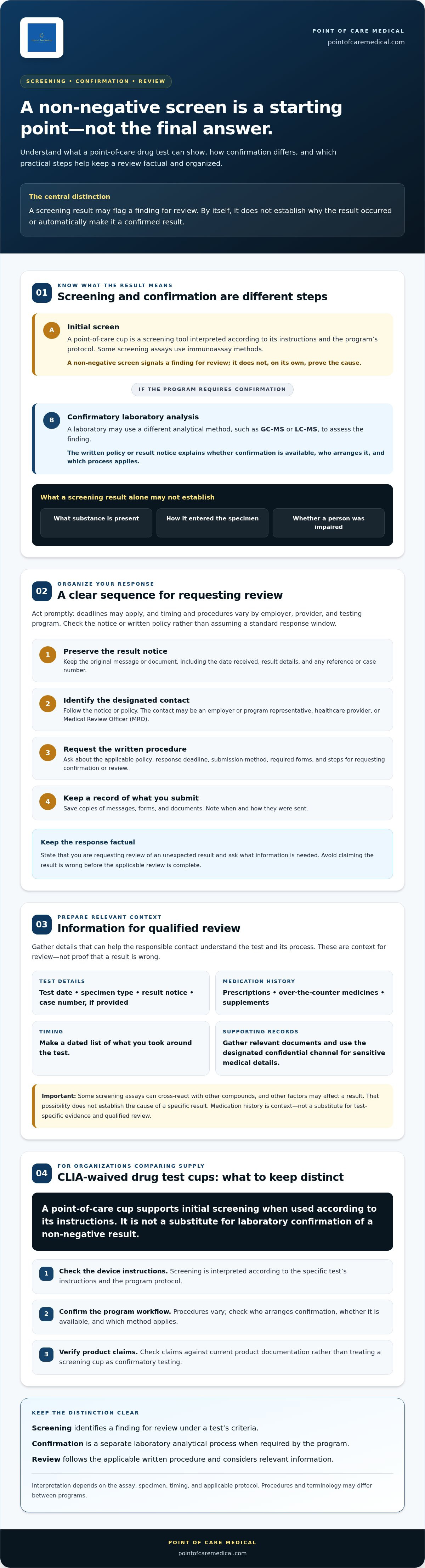
What if a positive drug screen is a starting point for review, not the final answer? That distinction matters when you’re worried about consequences or unsure whom to contact. For organizations comparing CLIA waived drug test cups wholesale, it matters too: a point-of-care cup is a screening tool, not a substitute for laboratory confirmation of a non-negative result.
A result can raise immediate concerns, but the next steps depend on the testing program and its procedures. Deadlines may apply, and a screening result may need confirmation before it is reviewed as a final finding. Avoid guessing about the cause or making claims you can’t support. Instead, ask promptly how to request a review and what documentation is needed.
This guide explains the difference between an initial screen and confirmatory testing, who to contact, and how to preserve relevant records. You’ll also learn how to provide medication information, follow the applicable review process, and keep your response factual while the result is being assessed.
Key Takeaways
- A non-negative screening result may require further review. By itself, it does not establish why the result occurred.
- Preserve the result notice, identify the appropriate contact, and request the written procedure and any applicable deadlines.
- Learn how screening, confirmatory analysis, and administrative review differ, and which process applies to your testing program.
- Use medication history, timing, and specimen details as information for qualified review, not as proof of an error.
- When evaluating CLIA waived drug test cups wholesale, distinguish point-of-care screening from laboratory confirmation and verify product claims against current documentation.
What a Positive Drug Screen Means and What It Does Not Prove
A positive drug screen is a result that meets the screening test’s criteria for a non-negative finding. It is not automatically a confirmed result, and an unexpected result is not automatically an error. In screening terms, a false positive generally means an initial assay indicates a substance or its marker, while follow-up assessment does not support that finding under the program’s criteria.
That distinction matters for anyone interpreting a point-of-care cup or comparing CLIA waived drug test cups wholesale. A cup can support initial screening when used according to its instructions, but it should not be treated as a confirmatory laboratory test. A screening result alone may not establish what substance is present, how it entered the specimen, or whether a person was impaired.
How initial drug screening and confirmation differ
Screening is an initial test interpreted according to the specific device’s instructions and the program’s protocol. Some assays use immunoassay methods. The overview of common testing methods describes their use and limitations, including the potential for false-positive screening results. If a program requires confirmation, a laboratory may use a different analytical method, such as GC-MS or LC-MS, to assess the finding.
Procedures vary. Check the written policy or result notice to learn whether confirmation is available, who arranges it, and which method applies. Don’t assume that every program uses the same terminology or workflow.
Why an unexpected positive result deserves careful review
Some screening assays can cross-react with other compounds, and other factors may affect a result. That possibility does not prove that a particular result is false or identify its cause. Medication history can provide relevant context, but don’t attribute a positive result to a medication without test-specific evidence and review by a qualified professional.
Interpretation depends on the assay, specimen, timing, and applicable protocol. Review the test instructions and notice, then ask the responsible contact what the result represents and what review steps are available. Keep the distinction clear: a screening result signals a finding for review, while a confirmatory laboratory result uses a separate analytical process to assess it.
How to Dispute a False Positive Drug Test: First Steps
First, preserve the result notice and ask the designated contact, in writing, how to request a review. Acting promptly helps you understand the process before a deadline passes. Timing and procedures vary by employer, provider, and testing program, so don’t assume a standard response window applies.
Use this sequence to organize your response:
- Save the notice. Keep the original message or document, including the date received, result details, and any reference or case number.
- Identify the right contact. Check the notice or written policy for an employer representative, provider, program representative, or Medical Review Officer.
- Request the procedure. Ask for the applicable policy, response deadline, submission method, and steps for requesting confirmation or review.
- Keep a record. Save copies of messages, forms, and documents you submit. Note when and how you sent them.
Keep your communication factual. State that you’re requesting review of an unexpected result, and ask what information is needed. Avoid asserting that the result is wrong before the applicable review is complete.
Who to contact and what to ask
Follow the contact instructions on the result notice or program policy. For a DOT-regulated process, the U.S. Department of Transportation explains the role of a Medical Review Officer (MRO). Other programs may direct questions to an employer contact, healthcare provider, or program representative.
Ask whether confirmation was performed, is available, or has already been completed. Request the steps, required forms, submission channel, and expected response timeline in writing. If you can’t identify the correct contact, ask the organization that issued the notice to direct you.
What information to gather before responding
Before you submit a response, collect the test date, specimen type, result notice, and any case number. Make a dated list of prescriptions, over-the-counter medicines, and supplements you took around the test. Gather supporting records if they’re relevant, but share sensitive medical details only through the designated confidential channel.
Keep your documentation focused on the questions the review process asks. For facilities evaluating CLIA waived drug test cups wholesale, this distinction also supports clear procedures: point-of-care screening supplies serve a screening role, while dispute review follows the applicable program’s process. Organizations reviewing toxicology screening supplies can view available testing supplies, while verifying product labeling and intended use before selection.
How Confirmation Testing and a Formal Review Can Help
Confirmation and formal review address different questions. Confirmatory analysis is a testing step that evaluates a screening finding using the procedure specified by the program. An administrative review examines the result and related information under that program’s process. Depending on the setting, different people may handle each step, such as a laboratory, Medical Review Officer, employer contact, provider, or program representative.
Neither step guarantees that a result will change, and confirmation may not be available in every situation. Procedures and terms vary by testing program and applicable requirements. Ask how the specimen, chain-of-custody records, and result will be reviewed, and which process applies to your case.
What to ask about drug test confirmation testing
Request specific details rather than assuming confirmation occurred. Ask whether a confirmatory method was used, which laboratory or reviewer handled the analysis, and how the result was communicated. If confirmation has not occurred, ask whether it can be requested and what rules govern that request.
Also ask whether the original specimen remains available and what procedures apply to any additional analysis. The organization can explain whether timing, specimen handling, or documentation affects the options. A separate consumer test may not use the same specimen or follow the official process, so it should not be treated as a replacement for the program’s review.
How to submit a clear, documented dispute
Keep your request brief and organized. Identify the result you’re questioning, state the review or confirmation you’re requesting, and provide relevant supporting information through the approved channel. Follow instructions for required forms, deadlines, delivery, and confidential material. If any step is unclear, ask for written clarification before submitting sensitive records.
- Include the notice date and any case or reference number.
- Describe the requested review without asserting an unverified cause.
- Attach only relevant documents requested or permitted by the process.
- Keep a dated copy of each submission and record the response received.
For facilities purchasing CLIA waived drug test cups wholesale, procurement and result review are separate operational matters. A screening cup supports an initial screening workflow; it does not perform confirmatory laboratory analysis or replace the formal dispute process. Confirm product labeling and intended use when selecting screening supplies, and follow the applicable program procedure when reviewing an individual result.
When Medication, Timing, or Procedure May Be Relevant
Medication history, collection details, and timing can help a qualified reviewer assess an unexpected result. They provide context, not proof of a false positive. The significance of any detail depends on the assay, specimen, and applicable protocol. Avoid assuming a specific medicine caused a result. If you have a question about cross-reactivity, ask the reviewer to assess it against the test used and its documentation.
Compare the test date and specimen information on your notice with your own records. If a detail appears inconsistent, describe the discrepancy clearly and ask how it will be evaluated. A concern about collection or documentation deserves a documented review, but it does not by itself establish that the result is invalid.
How to disclose prescriptions and other substances
Prepare an accurate list of prescriptions, over-the-counter medicines, and supplements. Include names, doses, dates taken, and relevant supporting records. Share this information with the designated reviewer through the channel the organization identifies for confidential health details. Ask who can access the information and how it will be considered in the review.
Don’t stop prescribed treatment or change how you take medication based on a screening result. Contact your prescribing healthcare professional about treatment questions. Keep your disclosure factual, and avoid labeling a medicine as the cause unless a qualified reviewer confirms that connection for the specific assay.
How to raise a concern about collection or records
Write down specific observations while they’re clear. Note the collection date and time, specimen type, any identification or labeling concern, and the exact information on the result notice that seems inconsistent. Separate what you directly observed from what you’re unsure about.
Send the concern to the responsible organization and ask how it will review specimen handling, records, and timing under its procedure. Keep a copy of your question and any response. Don’t assume a procedural concern invalidates a result without a documented determination.
For facilities evaluating CLIA waived drug test cups wholesale, clear product instructions and established documentation workflows can support consistent screening operations. Verify each product’s current labeling and intended use before selection. Review available screening supplies for facility procurement planning.
CLIA Waived Drug Test Cups Wholesale: Screening Supply Decisions
For facilities, a disputed result is a reminder to distinguish screening from follow-up review. Select supplies based on intended use, workflow, and current product labeling. Confirm panel configuration and any applicable use or waiver information from the product documentation rather than inferring those details from a product category.
Point of Care Medical distributes toxicology screening supplies, including the Rapid Test Cup RTC + Fentanyl. Consider it as a screening supply, not a confirmatory laboratory test. Check current product labeling before making claims about its performance or regulatory status.
Teams researching CLIA waived drug test cups wholesale should keep procurement decisions separate from procedures for reviewing individual results. To assess screening options for your facility, review available toxicology screening supplies.
After the Review: Understand the Outcome and Choose Next Steps
Once the review is complete, request the decision and any explanation the program can provide through its designated channel. Confirm whether the outcome reflects an initial screen, confirmatory analysis, or an administrative determination. If the explanation is unclear, ask which procedure was followed and whether another review step is available.
Next steps depend on the setting. Employment, healthcare, treatment, and legal processes can follow different policies and requirements, so don’t assume one process or set of rights applies everywhere. If the result may affect employment, care, treatment, or a legal matter, consider consulting a qualified professional who can assess your specific circumstances.
If the result remains disputed or the process is unclear
Ask the responsible contact what step comes next, who will handle it, and whether a response deadline applies. Keep the result notice, relevant policies, correspondence, submitted forms, and supporting records together. A clear file helps you track what was reviewed and what information you received.
If you still can’t determine how the decision was reached, request clarification in writing. A qualified medical, workplace, or legal professional may help address questions that require case-specific advice. Avoid treating a screening result or an incomplete explanation as conclusive proof of what happened.
Move Forward With a Clear, Documented Process
An unexpected positive screen calls for verification and a documented review, not assumptions. Preserve the notice, contact the responsible organization promptly, and ask which confirmation and review procedures apply. Keep medication details and any concerns about timing or specimen records factual, and share sensitive information through the designated channel.
For facilities, separate screening procurement from confirmatory testing. When evaluating CLIA waived drug test cups wholesale, check current product labeling, intended use, panel configuration, and waiver status rather than relying on assumptions. Point of Care Medical distributes toxicology and rapid screening supplies to healthcare and screening facilities, including the Rapid Test Cup RTC + Fentanyl. Verify its current labeling before making performance or regulatory claims. Screening supplies do not replace laboratory confirmation.
Procurement teams can review Point of Care Medical’s toxicology screening supplies as part of their evaluation. With clear procedures and careful documentation, you can handle result concerns methodically and make informed screening supply decisions.
Frequently Asked Questions
Can I dispute a positive drug test result?
Yes, you can raise a concern through the process established by the employer, provider, or testing program. Contact the designated reviewer promptly and request the applicable policy in writing. Ask whether confirmatory testing or a formal review is available, who handles the request, and how to submit supporting information. The appropriate route depends on the setting and its procedures, so don’t assume another organization’s process applies.
How do I prove a false positive drug test?
There’s no single document or explanation that proves every disputed result is false. A reviewer may consider confirmatory analysis, specimen records, medication information, and whether the program’s procedures were followed. Gather accurate, relevant records and submit them through the designated confidential channel. A medication or collection concern can provide context, but it isn’t automatic proof. Ask the qualified reviewer how each detail will be assessed.
What should I do first after a false positive drug screen?
Preserve the result notice and contact the organization named in the testing instructions as soon as practical. Request the written dispute process and any applicable deadline. Ask whether confirmation has occurred or can be requested. Keep your communication factual, and save copies of messages and documents you submit. Procedures vary across employment, healthcare, and treatment settings, so follow the instructions for your specific program.
Can prescription medication cause a false positive drug test?
Some screening assays may cross-react with certain substances, but whether that matters depends on the specific test and its instructions. Don’t assume a prescription explains a result. Provide accurate medication information to the authorized reviewer and ask whether confirmatory analysis can clarify the finding. Verify medication-specific concerns using reliable, assay-specific documentation or qualified professional review. Don’t stop or change prescribed treatment without advice from your healthcare professional.
What is the difference between a screening test and a confirmation test?
A screening test is generally an initial assessment interpreted under the test’s instructions. A non-negative screen may require further evaluation, depending on the program. Confirmatory testing uses a separate analytical method to assess a specific finding. The method and availability vary. For facilities comparing CLIA waived drug test cups wholesale, remember that screening cups support screening workflows, not confirmatory laboratory analysis. Ask the responsible organization which procedure applies to a result.
How long do I have to dispute a positive drug test?
There’s no single deadline for every workplace, healthcare provider, or testing program. Check the result notice and applicable written policy promptly. If the deadline or submission method isn’t clear, ask the designated contact to confirm it in writing. Record when you made the request and keep a copy of the response. Don’t rely on a timeline from another organization or assume the same process applies to your situation.
Can an at-home drug test confirm or overturn an official result?
A separate at-home test generally doesn’t replace the official program’s review or confirmatory procedure. Differences in specimen, timing, method, and handling can make the results difficult to compare. Follow the instructions from the organization that ordered the test and ask how confirmation is handled. Another screening cup is not a substitute for laboratory analysis of the official specimen through the applicable process.


