

A rapid result alone doesn’t establish whether a test is CLIA-waived. CLIA is the abbreviation for the Clinical Laboratory Improvement Amendments, according to the Centers for Medicare & Medicaid Services. In the United States, healthcare facilities must obtain a Certificate of Waiver to lawfully conduct testing with CLIA-waived kits. For clinics sourcing CLIA waived rapid diagnostic test kits wholesale, that distinction shapes product selection.
Drug test cups raise a related purchasing question: how do CLIA-waived status and FDA clearance apply to the specific test? The answer matters for product records and clinic workflows. A kit’s format or speed alone does not establish either. When sourcing CLIA waived rapid diagnostic test kits wholesale, compare the exact product with its stated classification.
This guide explains what CLIA-waived means, then compares drug, COVID-19, and flu test options. It also examines pricing factors and supplier selection. Use the practical criteria ahead to assess products and plan procurement around your clinic’s testing needs.
Key Takeaways
- Distinguish a test’s CLIA-waived status from its FDA clearance when assessing drug test cups for clinic use.
- Compare COVID-19 and combined COVID-19/flu testing options by the clinical need and workflow they serve.
- Understand how case quantities and per-test pricing affect purchasing decisions across diagnostic kit categories.
- Use intended use, test format, and operational fit to assess kits and suppliers for your clinic.
- Explore respiratory, HIV, and oral fluid testing options that may align with your clinic’s testing needs.
CLIA-waived and FDA-cleared drug test cups
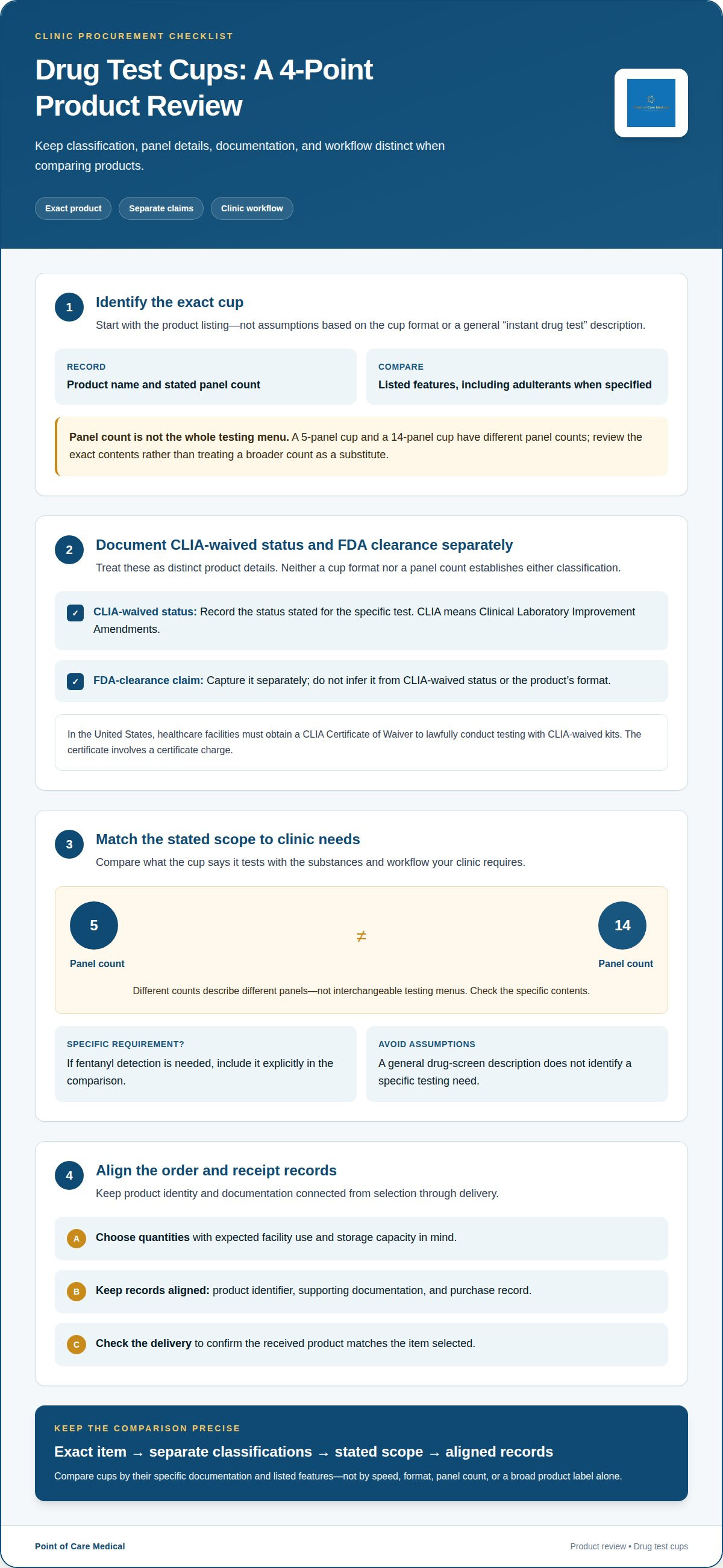
When purchasing drug test cups, review CLIA-waived status and FDA clearance as separate details. Record each independently, and match catalog wording to the documentation for that specific test. This keeps purchasing decisions tied to the product’s stated classification rather than assumptions based on its format or panel count.
CLIA is the abbreviation for the Clinical Laboratory Improvement Amendments, according to the Centers for Medicare & Medicaid Services. The United States Congress states that the Clinical Laboratory Improvement Amendments of 1988 govern laboratory testing on humans in the United States. Healthcare facilities must obtain a CLIA Certificate of Waiver to lawfully conduct testing with CLIA-waived kits. The Certificate of Waiver involves a certificate charge.
For a drug cup, capture the precise product description before comparing options. A 5-panel cup and a 14-panel cup describe different panel counts, not interchangeable testing menus. A cup listing adulterants also identifies a feature relevant to procurement. Map those details to the substances and workflow your clinic needs. Avoid treating a broader panel count as a substitute for reviewing its exact contents.
Use a consistent review sequence for every item:
- Record the product name and the panel count shown.
- Separate the stated CLIA-waived status from any FDA-clearance claim.
- Match the available product documentation to the exact item being ordered.
- Compare the cup’s stated testing scope with your clinic’s intended workflow.
This approach makes product comparisons more precise. Two cups described as instant drug tests may differ in panel count or listed features, so record those distinctions instead of comparing only the format. If fentanyl detection is a requirement, include it explicitly in the comparison. A general drug-screen description is not a substitute for identifying a specific testing need.
Wholesale purchasing also involves choosing quantities. Compare the package format with your facility’s expected use and storage capacity, and keep the product identifier, documentation, and purchase record aligned. When sourcing CLIA-waived rapid diagnostic test kits wholesale, this creates a clear record from selection through receipt. On arrival, confirm the delivered product matches the one selected.
Keep the distinction clear: CLIA-waived status relates to the testing category relevant to facility operations, while FDA clearance is a separate product claim to document. Neither a panel count nor a cup format establishes either classification. Reviewing the exact product, its documentation, and its intended workflow makes procurement more accurate.
COVID-19 and influenza rapid tests
Respiratory test selection starts with the targets a clinic needs. A COVID-19 antigen test focuses on SARS-CoV-2. A combined SARS-CoV-2/Flu A+B test names three targets. Those formats serve different purchasing needs. A clinic choosing between them should match the test’s stated targets to its intended testing workflow. Don’t assume a single-target kit covers influenza. Likewise, a combined test should be selected for its named targets, not just its broader label.
For example, GenBody COVID-19 Rapid Antigen Test is a standalone COVID-19 option. ViraDx™ SARS-CoV-2/Flu A+B Rapid Antigen Test names both SARS-CoV-2 and influenza A and B. These product names make the distinction clear during catalog review. Record the exact test name and target scope together. That helps purchasing staff compare like with like and reduces ambiguity when ordering repeat stock.
Before placing an order, compare each kit with your clinic’s requirements:
- Testing scope: Match the named targets to the clinic’s intended use.
- Product format: Separate standalone COVID-19 kits from combined COVID-19 and flu tests.
- Stock handling: Review the product’s stated expiration information when planning inventory.
- Order records: Keep product names and quantities aligned with the purchase record.
Expiration details matter in stock rotation. The GenBody COVID-19 rapid antigen test listing states that new stock expires in July 2027. Use the expiration information associated with the specific stock being purchased. Organize received kits so staff can identify expiration details during routine inventory review. This supports orderly rotation without assuming that every lot shares the same date.
Wholesale purchasing also requires a quantity decision. Estimate demand from the clinic’s planned testing workflow, then compare that need with available package quantities. The research listing describes a GenBody box containing 25 tests. That package size helps buyers understand the unit being evaluated, but it doesn’t establish the right quantity for every clinic. Consider storage capacity and expected use when planning a purchase.
For clinics sourcing CLIA waived rapid diagnostic test kits wholesale, a clear comparison record can separate product scope, package size, and expiration information. Keep those details distinct. A combined test may fit a workflow that needs COVID-19 and influenza targets, while a standalone COVID-19 kit may fit a narrower need. Select by the named targets first, then align the order quantity and stock rotation plan with clinic operations. This approach makes respiratory test purchasing more consistent across future orders.
Diagnostic test kit prices
Compare kit pricing by unit, package, and testing scope. A per-test figure may look different from a package total, and listings may state prices using different units. Confirm whether each figure refers to an individual test or a full package before comparing. Otherwise, unlike purchase quantities can appear equivalent.
Drug test cups illustrate why the product description matters. A 5-panel CLIA-waived cup and a 14-panel instant cup are different products. The latter may also list adulterants. Compare panel count and stated features before using price as a deciding factor. A lower per-test cost does not make two cups equivalent if their testing scope differs. Keep each product’s unit and contents visible in the comparison.
Use this purchasing sequence to standardize comparisons:
- Record the exact product name and testing category.
- Identify whether the listed price applies per test, kit, or case.
- Note the case quantity and calculate the order quantity from that unit.
- Compare products with matching panel counts or named targets.
- Review expiration information and expected stock use before ordering.
Respiratory kits require the same unit discipline. A GenBody COVID-19 kit is listed as a box containing 25 tests. A combined COVID-19 and flu kit may have a different kit configuration. Compare the number of tests inside each package, not just the package label. Keep standalone COVID-19 tests separate from kits naming SARS-CoV-2 and influenza targets.
Build a simple worksheet for procurement. Include product name, package contents, price unit, case quantity, testing scope, and expiration details. For example, list a 5-panel cup separately from a 14-panel cup with adulterants. Record a 25-test respiratory box by its contents. These fields make quote comparisons easier to interpret and reduce errors when budgets use per-test calculations.
Price differences may reflect the product and the unit being compared. Panel count, named targets, package contents, and package format all affect whether two listings are comparable. Do not rank products by a headline figure alone. First align their functions and units, then compare the relevant purchasing terms. This gives clinics a more meaningful basis for evaluating procurement costs without treating unlike kits as substitutes.
When sourcing CLIA-waived rapid diagnostic test kits wholesale, match the quantity to clinic needs. A larger package may suit steady use, while a smaller one may better fit limited demand or storage capacity. Use the same comparison fields for each purchasing cycle to track product scope, quantity, and pricing as needs change.
Selecting test kits and suppliers
For each kit, request labeling, instructions, and documentation identifying its intended use and CLIA-waived status. Record any FDA-clearance claim separately, and match every document to the exact product name and package.
Storage, shelf life, and shipping conditions depend on the individual kit’s labeling. Follow its storage and handling instructions, and check the expiration date and package condition on arrival.
Choose a supplier based on product fit, not a broad catalog category. Compare intended use, named test targets, panel contents, and package quantity. Product information should make these distinctions clear. A combined respiratory test listing, for example, should name its targets, while a drug cup listing should identify its panel scope. Specific descriptions are more useful than generic terms such as “rapid test.”
Build a concise supplier review around records your clinic can retain: product name, package description, applicable documentation, ordering unit, and expiration information. Connect the purchase record to the product received. If a listing describes a package, use the same unit in the order record. This supports consistent receiving and reordering.
Review how each supplier presents product information across its catalog. Clear names and consistent package descriptions help staff distinguish related kits. Check that the stated testing scope fits the clinic’s intended workflow. A supplier comparison can also capture:
- Product documentation and labeling tied to the exact item.
- Package contents and ordering units shown clearly.
- Expiration details available for inventory planning.
- Shipping information and receipt procedures relevant to storage.
Use a documented receiving process. Match the delivered product name to the purchase record, check the package condition and expiration information, and store the product according to its labeling. Record discrepancies before distributing kits for use. These steps create a traceable handoff from order to inventory without assuming every product has the same handling requirements.
For repeat purchases, retain the same comparison fields. This helps identify changes in product descriptions, package configuration, or documentation. Keep different test categories in separate records, especially when a catalog includes respiratory kits and drug screens. Item-level review prevents a familiar supplier name from replacing product checks and makes purchasing decisions easier to explain.
Shortlist suppliers whose product information supports your clinic’s selection and receiving process. Before adding a kit to routine purchasing, align the product, its documentation, and its storage instructions. This practical sequence helps clinics source CLIA-waived rapid diagnostic test kits wholesale while maintaining clear product records and organized inventory.
What diagnostic tests are CLIA-waived in the United States?
CLIA-waived status applies to specific tests, not every product in a broad category. A rapid format alone does not establish that status. Match the exact product name to its stated classification before adding it to clinic purchasing records. This distinction matters across respiratory testing, drug screening, and other diagnostic categories. Products serving related needs may have different classifications. Use the individual test’s documentation rather than inferring status from its purpose, speed, or package.
Available examples include infectious mononucleosis heterophile antibody testing, listed with CPT code 86308QW. That identifier is specific to the named testing category. It doesn’t establish that another assay, specimen type, or product is also waived. Treat each code and product description as a separate record. The exact test, code, and classification should stay connected in procurement files.
Most CLIA-waived tests provide results in 5-20 minutes. That range can help clinics consider workflow, but it doesn’t identify which tests qualify. A quick turnaround and a waived designation answer different questions. Review the test’s stated status independently from its result timing. This avoids classifying a kit based only on the time required to produce a result.
Use a product-by-product review:
- Record the exact test name and intended testing category.
- Match the stated CLIA-waived designation to that specific product.
- Capture any listed code, such as 86308QW, with its test description.
- Keep result timing, such as 5-20 minutes, as a separate workflow detail.
This review also distinguishes test categories from specimen formats. Oral-fluid tests, for example, describe a specimen format, not a CLIA classification. Apply the same product-specific review to oral-fluid options, respiratory assays, and drug screens. Do not transfer one kit’s status to another simply because both serve a similar purpose.
For clinic planning, organize the catalog by test name, category, status, and any applicable code. Then compare those fields against the planned workflow. A respiratory assay and mononucleosis test answer different clinical needs. The 86308QW example illustrates why a specific test identifier is more useful than a broad label such as “rapid diagnostic test.” Keep classifications tied to the exact test being considered.
Clinics evaluating specimen-format options can review oral fluid testing options as a distinct category. Apply the same product-specific classification review before incorporating any test into purchasing or workflow records.
Point of Care Medical: GenBody COVID-19 Rapid Antigen Test
Point of Care Medical offers the GenBody COVID-19 Rapid Antigen Test for clinics sourcing COVID-19 testing kits. For clinics comparing respiratory test formats, it also offers the ViraDx™ SARS-CoV-2/Flu A+B Rapid Antigen Test, which names SARS-CoV-2 and influenza A and B in its product title.
Choose between these options according to the targets your clinic needs. The GenBody test addresses COVID-19 testing, while ViraDx™ names both COVID-19 and influenza targets. Point of Care Medical also offers the SURE CHECK HIV 1/2 Assay and Oral Fluid tests for other testing needs. Keep product selection aligned with intended use and review the specific kit details as part of procurement.
For information about these testing options, contact Point of Care Medical or visit pointofcaremedical.com.
Turn your testing plan into a practical next step
Use your clinic’s testing priorities to build a procurement plan that remains useful beyond the next order. Establish a process for matching each product to its intended use, documenting purchasing decisions, and organizing inventory. This gives staff a consistent reference as needs change. A focused approach to sourcing CLIA-waived rapid diagnostic test kits wholesale also keeps product selection connected to clinic operations.
Point of Care Medical offers the GenBody COVID-19 Rapid Antigen Test, Rapid Test Cup “RTC” + Fentanyl, and ViraDx™ SARS-CoV-2/Flu A+B Rapid Antigen Test. These options address distinct testing categories, so align each selection with your clinic’s requirements. For a next step, explore testing options at Point of Care Medical and identify which products fit your procurement plan.
A clear process makes the next purchasing decision easier to manage.
Frequently Asked Questions
What Does “CLIA Waived” Mean?
“CLIA-waived” describes a test classified as waived under the Clinical Laboratory Improvement Amendments. According to the Centers for Medicare & Medicaid Services, CLIA stands for Clinical Laboratory Improvement Amendments. The United States Congress states that the Clinical Laboratory Improvement Amendments of 1988 govern laboratory testing on humans in the United States. A facility using waived kits must obtain a Certificate of Waiver. Keep the facility’s certificate and each product’s classification distinct in purchasing records.
Which manufacturers and distributors sell CLIA-waived rapid diagnostic test kits wholesale?
Point of Care Medical distributes rapid diagnostic testing supplies for professional and clinical teams. Its offerings include the GenBody COVID-19 Rapid Antigen Test, ViraDx™ SARS-CoV-2/Flu A+B Rapid Antigen Test, SURE CHECK HIV 1/2 Assay, Rapid Test Cup “RTC” + Fentanyl, and Oral Fluid tests. These names identify product options, not a claim that every configuration has the same regulatory classification. Match the exact product and configuration to the intended clinic use.
What are the minimum order quantities and wholesale prices for CLIA-waived rapid tests?
Point of Care Medical provides personalized pricing after you submit a request with product selections, quantities, and configuration notes. The team reviews the request and provides a quote. Specify the test and quantity your facility is considering, and keep the product configuration aligned with the item under review. Product availability and regulatory classification can vary by configuration.
What are the risks of buying rapid diagnostic test kits from unauthorized or overseas suppliers?
A key purchasing concern is whether the product received matches its description and supporting documentation. Compare the exact product name, package label, configuration, and accompanying records. On arrival, match the delivered item to the purchase record and review its labeled storage conditions and expiration information. This creates a clear record of what the clinic ordered and received, beyond the broad catalog description.
How do state rules and local distributor availability affect purchasing CLIA-waived rapid tests?
State and local purchasing conditions can affect which distribution channels a clinic uses, while CLIA requirements still apply to facility testing. Keep the facility’s Certificate of Waiver separate from the product’s classification in procurement records. Point of Care Medical serves professional customers across the United States with configurable testing products. Identify the required product and configuration, then organize purchasing and receiving records around that item.
What are the storage, shelf-life, and shipping requirements for wholesale rapid diagnostic test kits?
Plan case quantities around your storage capacity and expected use, and rotate stock using the expiration information for the specific product and lot. The GenBody COVID-19 listing states that new stock expires in July 2027.


